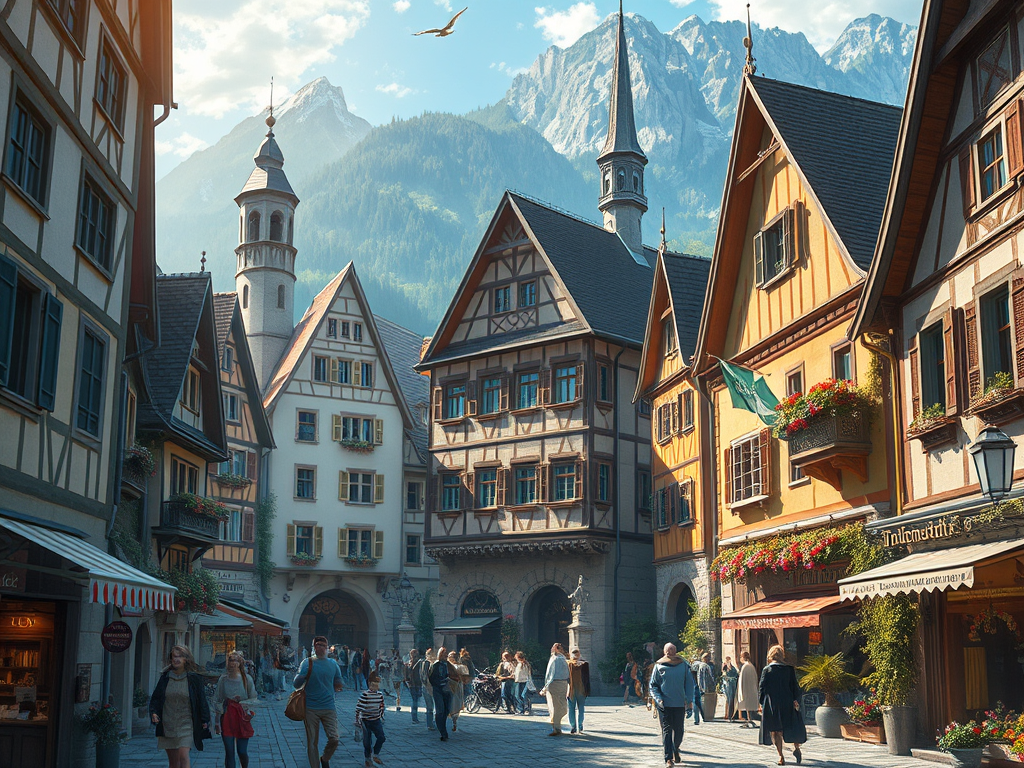


Tucked into the rolling hills of northeastern Switzerland, Appenzell feels like a place where time has stood still for a hundred years. It is small, proudly traditional, and deeply rooted in customs that have shaped daily life here for centuries. A visit to Appenzell is kind of like stepping into a living culture. It is one that values community, self-governance, and a strong connection to the land.
For me, this visit was strongly personal. My grandmother’s maiden name was Appenzeller, meaning someone down the line in her family history named her ancestor as being from Appenzell. (Also visit the writeup of my trip to Seoul. Here my Great uncle, Henry Appenzeller established the modern education system in Korea)
Colorful Architecture and a Distinctive Look
Appenzell is instantly recognizable for its beautifully painted buildings. The narrow streets are lined with tall, narrow houses topped with steeply peaked roofs. Each facade is decorated in bright colors and often adorned with traditional murals or signage.
These buildings weren’t designed for aesthetics alone. The steep roofs help shed heavy alpine snow, while the narrow shapes reflect the medieval layout of the town. Many structures combine living quarters with shop space on the ground floor. This is a practical design that supported Appenzell’s long history as a market town. Today, the effect is charming and cohesive, making the entire town center feel like an open-air museum—one that people still live and work in every day.
A Town Shaped by History and Self-Rule
Appenzell’s history stretches back to the Middle Ages. The town formally emerged in the 13th century as a market and trading center. What truly sets Appenzell apart, however, is its role in preserving one of Switzerland’s oldest democratic traditions: the Landsgemeinde. For centuries, citizens gathered in the town center to vote in the open air. Here they raise their hands to make decisions on laws, budgets, and leadership.
Modern day Appenzellers still hold their annual Landsgemeinde (open-air parliament) in the town square. On the last Sunday of April, citizens gather in the Landsgemeindeplatz in Appenzell to vote on cantonal issues and elect officials by a show of hands, holding onto this traditional form of direct democracy
The town square and surrounding streets are still the symbolic heart of civic life. Standing there, it was easy for me to imagine generations of residents assembling on that very spot to debate and decide the future of their community. It is an extraordinary reminder that democracy here is not abstract, but personal and communal.
Economy, Agriculture, and Life on the Hillsides
Appenzell’s economy has long been tied to agriculture, craftsmanship, and trade. The surrounding hills are dotted with farms, and it’s common to see (and hear the bells of) sheep and cattle grazing on the lush pastures just beyond town. These animals aren’t just picturesque. They remain an essential part of the local economy, contributing to dairy production, wool, and the region’s renowned cheeses.
Traditional industries like embroidery and textile work also played a major role in Appenzell’s development. Their influence can still be seen in local museums and artisan shops. Today, tourism complements these long-standing livelihoods, allowing the town to share its traditions while maintaining its rural character.
Things to Do in and Around Appenzell
Despite its small size, Appenzell offers plenty to explore.
- Wander the Old Town: Simply walking through the historic center is a highlight. Enjoy the colorful buildings, many small boutiques, and local food shops.
- Visit the Appenzell Museum: Learn more about regional customs, folk art, and the town’s unique political history.
- Hike the Surrounding Hills: Well-marked trails lead into the countryside. Take in the sweeping views and a chance to see the grazing sheep up close.
- Ride the cable cars up Säntis or Ebenalp for stunning views and hikes (like Aescher Gasthaus cliff restaurant). From the top station, you’ll pass through the Wildkirchli caves, which offers scenic views and a straightforward path.
- Explore Local Cheese Shops: Appenzell cheese is famous throughout Switzerland, and tasting it at the source is a must.
- Appenzeller Bier Brewery: Have a beer or two and meet some of the friendliest locals.
- Head to Lichtenstein for a day trip

Where to Stay
For a memorable stay, choose accommodation close to the town center so you can experience Appenzell at its quietest in the early morning and evening.
- Romantik Hotel Säntis – A refined option with traditional styling and an excellent restaurant.
- Hotel Adler Appenzeller – While a little more rustic, this classic place is comfortable, friendly and historic. Best of all, the location on the square can’t be beat.
- Guesthouses and Inns – Smaller family-run accommodations just outside the center provide a quieter, countryside feel.
Staying near the square allows you to fully appreciate how central it remains to both social and civic life.
Where to Eat and Drink
Appenzell’s food scene reflects its rural roots and love of hearty, comforting dishes.
- Traditional Restaurants serve specialties like rösti, sausages, and cheese-based dishes featuring local Appenzeller cheese.
- Cafés and Bakeries offer simple pleasures—coffee, pastries, and a place to linger and people-watch.
- Appenzeller Bier Brewery: A visit to the local brewery is a highlight. Appenzeller Bier is proudly regional, brewed with alpine water and traditional methods. Sampling a beer here offers a taste of local craftsmanship and community pride.
Final Thoughts
Appenzell’s history of self-governance, colorful architecture, pastoral surroundings, and strong sense of place make it unlike anywhere else in Switzerland. Whether you’re wandering the square, hiking the hillsides, or enjoying a beer brewed just a few miles away, Appenzell offers a rare opportunity to experience a living tradition. This tradition continues to shape everyday life in this quietly remarkable corner of the Alps.