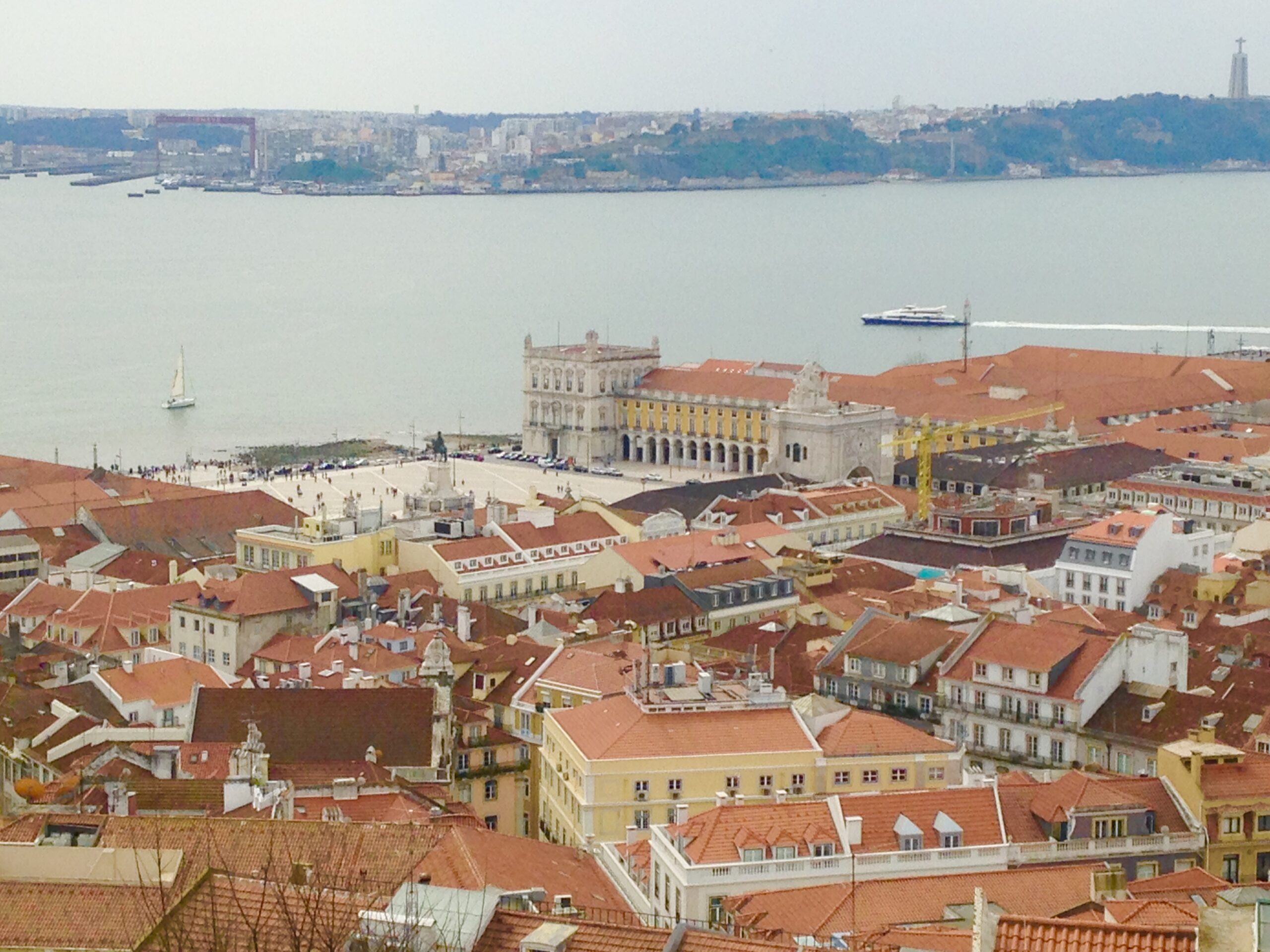

Lisbon is one of Europe’s oldest capitals, but don’t let its ancient walls fool you—this is a city that’s buzzing with life, day and night. From the moment you arrive, you’ll feel it: the hum of people in motion, riding trams through steep hills, sipping drinks in sunny plazas, wandering through tile-covered alleys, and dancing long after dark. Lisbon may be draped in history, but its streets are full of youth, color, and movement.
This is a city made for walking, exploring, eating, and staying out late. Whether you’re climbing to a miradouro (viewpoint) or cooling off inside a 500-year-old monastery, Lisbon wraps you in its charm.
Alfama and Baixa: Old Bones, Young Soul
Start your adventure in Alfama, Lisbon’s oldest and most atmospheric neighborhood. It’s a maze of narrow, winding alleys, tiny cafés, flower-filled balconies, and views that open suddenly between buildings. This is the soul of Lisbon, where locals still call to each other from windows and Fado music spills out of hidden taverns at night.
Get lost on purpose. Follow the sound of footsteps echoing off cobblestones. Visit the Sé Cathedral, the Castelo de São Jorge, and pause at Miradouro de Santa Luzia to take in a postcard-perfect view over the red rooftops and the Tagus River. Alfama feels ancient, but its energy is electric—locals, travelers, students, and musicians all out and about.

From there, walk downhill into Baixa, Lisbon’s elegant downtown. Rebuilt after the 1755 earthquake, Baixa is all grand squares and symmetrical streets, but don’t mistake its neatness for quiet. This is the heart of the city, filled with street performers, pop-up markets, outdoor dining, and filled with interesting people from all over the world. Wander down Rua Augusta, snap a photo under the Arco da Rua Augusta, and head to Praça do Comércio to feel the full sweep of the river in front of you.


Trams, Tile, and Time Out Market
You’ll spot Tram 28 rattling up the hills— and it’s one of the iconic sights to take in. Hop on if you can snag a seat, or just follow its path on foot for an impromptu city tour. Lisbon’s sidewalks are patterned with calçada portuguesa, and the buildings are wrapped in azulejos (hand-painted tiles) that make every street a gallery. Keep your camera ready—this city surprises you around every corner.
When you’re hungry, head to the Time Out Market. Located near Cais do Sodré, it’s where locals and visitors come together to eat, drink, and hang out. Grab small plates from Portugal’s best chefs, and sip a ginjinha (Lisbon’s beloved cherry liqueur). Or try some Touriga Nacional – Portugal’s finest red wine – and soak in the scene. This market is more than a place to eat—it’s where Lisbon’s creative and culinary pulse beats the loudest.
Belem: Monuments and a Custard Tart Legacy
Make your way west to Belém, where Lisbon’s Age of Discovery comes to life. Here you’ll find monumental history. Vist the Jerónimos Monastery, a soaring Manueline masterpiece built to honor Vasco da Gama’s voyage to India. Nearby, the Belém Tower stands at the edge of the river like a stone sentinel, once guarding the port of departure for Portugal’s explorers. These riverfront landmarks celebrate the explorers who set sail from Portugal to map the globe.


For a deep dive into the Age of Discovery, don’t miss the Maritime Museum or the striking Monument to the Discoveries. And for something completely different, check out the MAAT (Museum of Art, Architecture and Technology), a bold modern building that contrasts sharply with its historic neighbors—and perfectly represents Lisbon’s old-meets-new personality.
But your real mission in Belém? Eat a Pastel de Belém. Not just any custard tart—the original. This bakery has been making these sweet, flaky, eggy treats since 1837, and they are worth every second of the line.
The Charm of Lisbon’s Hillside Neighborhoods
Don’t skip the romantic Bairro Alto, where lively bars and candlelit restaurants come alive after dark. The nearby Chiado district is more refined, full of historic cafés and bookstores once frequented by poets and philosophers.
Head farther uphill to Graça, a neighborhood less touched by tourism but full of character, and Campo de Ourique, a local favorite for food markets and boutique shopping. Each of these neighborhoods offers a different flavor of Lisbon, from the bohemian to the elegant.
Other Hidden Gems Worth Exploring:
Lisbon is full of hidden gems—quiet courtyards, tucked-away museums, offbeat viewpoints, and quirky cafés that you’ll miss entirely if you stick to the standard tourist trail. Here are some of the best, lesser-known spots to explore that still give you that magical “I can’t believe this is real” feeling:
- The Tile Museum (Museu Nacional do Azulejo)
- Why it’s a gem: Set inside a former convent, this museum tells the story of Portugal’s famous azulejos (tiles), with intricate examples dating back to the 15th century. The real jaw-dropper is the panoramic tile panel of Lisbon before the 1755 earthquake.
- Bonus: The chapel inside is stunning and totally unexpected.
- Jardim do Torel.
- Why it’s a gem: A quiet, locals-only park perched on a hill with hammocks, palm trees, and a peaceful vibe. It offers panoramic views over downtown Lisbon without the crowds of the miradouros.
- How to get there: Take the Lavra Elevator—Lisbon’s oldest—and walk a short distance uphill.
- Carmo Convent Ruins (Convento do Carmo)
- Why it’s a gem: An open-air Gothic church with its roof long gone, left hauntingly beautiful after the 1755 earthquake. It now houses an archaeological museum, complete with medieval tombs and a couple of mummies.
- Best for: Architecture lovers and fans of eerie, atmospheric places.
- Cemitério dos Prazeres (Cemetery of Pleasures)
- Why it’s a gem: It sounds morbid, but this cemetery in the Estrela district is grand, peaceful, and filled with elaborate mausoleums and sculptures. Think of it as Lisbon’s answer to Père Lachaise in Paris.
- Pro tip: The views at the back of the cemetery stretch out over the 25 de Abril Bridge.
- Casa do Alentejo
- Why it’s a gem: From the outside, it looks like just another city building. But inside? A jaw-dropping Moorish-style courtyard and tiled ballroom hidden above a quiet restaurant. It’s a cultural center for the Alentejo region and a total surprise.
- Location: Near Rossio Square.
- Miradouro da Nossa Senhora do Monte
- Why it’s a gem: Less touristy than other viewpoints and arguably the best sunset view in the city. It sits higher than Miradouro da Graça and gives you a wide-angle shot of the entire skyline.
- Pro tip: Bring a bottle of wine and join the locals in watching the city turn gold.
- Museu da Marioneta (Puppet Museum)
- Why it’s a gem: A fun, offbeat museum housed in a converted convent in Santos, featuring puppets from around the world. It’s quirky, creative, and perfect if you want a break from palaces and churches.
- Bica Elevator (Elevador da Bica)
- Why it’s a gem: Technically not hidden, but the street it runs down is one of the most photogenic spots in Lisbon. Skip the crowded funicular ride—walk down beside it for a street-level view of colorful houses and laundry-lined balconies.
- Taberna Sal Grosso (Secret food spot)
- Why it’s a gem: A tiny, no-frills tavern near Santa Apolónia serving elevated takes on Portuguese classics. It feels like a secret neighborhood kitchen and is a great place to eat among locals.
- Pro tip: Reservations recommended—this spot is small and fills up fast.
- The Water Museum (Museu da Água)
- Why it’s a gem: Tucked in a quiet corner of Lisbon, this museum is built around a 19th-century aqueduct pumping station. The elegant brickwork, industrial machinery, and underground cisterns are oddly beautiful and fascinating.
- Why go: It connects you to the often-overlooked infrastructure of Lisbon’s survival and growth.
What to Drink, Buy, and Taste
In addition to the famous Pastel de Belém, don’t leave Lisbon without trying:
- Ginjinha, the sweet-sour cherry liqueur served in shot glasses (with or without a cherry at the bottom)
- Bacalhau à Brás – Portugal’s national dish of shredded cod, eggs, and potatoes
- Grilled sardines, especially if you’re visiting during the summer festivals
- Octopus salad, piri-piri chicken, and amêijoas à Bulhão Pato (garlicky clams)
For shopping, head to LX Factory—a reclaimed industrial space now filled with indie boutiques, bookstores, murals, and rooftop cafés—or pick up local ceramics, cork products, or embroidered linens from family-run shops in Chiado.

After Dark: Where the City Comes Alive
As the sun sets, Lisbon doesn’t slow down—it just changes gears. Start your night in Bairro Alto, a hilltop neighborhood that transforms after dinner into a party in the streets. The bars are small, the music is loud, and the crowd spills into the alleys. Grab a drink (another ginjinha, perhaps?) and wander—no cover charges, just vibes.
Looking for something a little smoother? Head to Chiado for live jazz, rooftop cocktails, or a cozy wine bar. For DJs and dancing, Cais do Sodré is the place to be. Once gritty, now trendy, this riverside district is home to some of Lisbon’s best nightclubs, like Musicbox and Pensão Amor, a former brothel turned boudoir-style cocktail lounge.
Lisbon’s nightlife doesn’t really start until midnight, and it doesn’t end until the trams start running again.
Day Trips From Lisbon
- Sintra – Explore palaces like Pena Palace, Quinta da Regaleira, and Moorish Castle, all set in a dreamy hillside town.
- Cascais – A chic seaside escape with beaches, seafood restaurants, and coastal walks.
- Estoril – Known for its casino, beaches, and glamorous old-world charm.
- Óbidos – A medieval walled town with cobblestone streets, whitewashed houses, and the chance to stay overnight in a real castle.
- Évora – A UNESCO World Heritage site with Roman ruins, the eerie Chapel of Bones, and historic architecture.
- Fátima – One of the most important Catholic pilgrimage sites in the world.
- Mafra – Home to the magnificent Mafra National Palace, one of Portugal’s largest baroque buildings.
- Setúbal & Arrábida Natural Park – Beautiful coastlines, dolphin-watching tours, and incredible seafood.
- Tomar – Explore the Convent of Christ, a stunning monument tied to the Knights Templar.
- Nazaré – Famous for giant waves that attract surfers from across the globe
Final Thoughts: Lisbon Is Meant to Be Lived
Lisbon is a city with ancient roots and a heartbeat that’s very much in the present. It’s a city of contrasts—sunlight and shadow, saudade and celebration, marble monasteries and messy bar crawls. The best way to experience it? Walk it. Ride it. Eat it. Hear it. Stay up too late. Say yes to another tart. Let your feet find the rhythm.