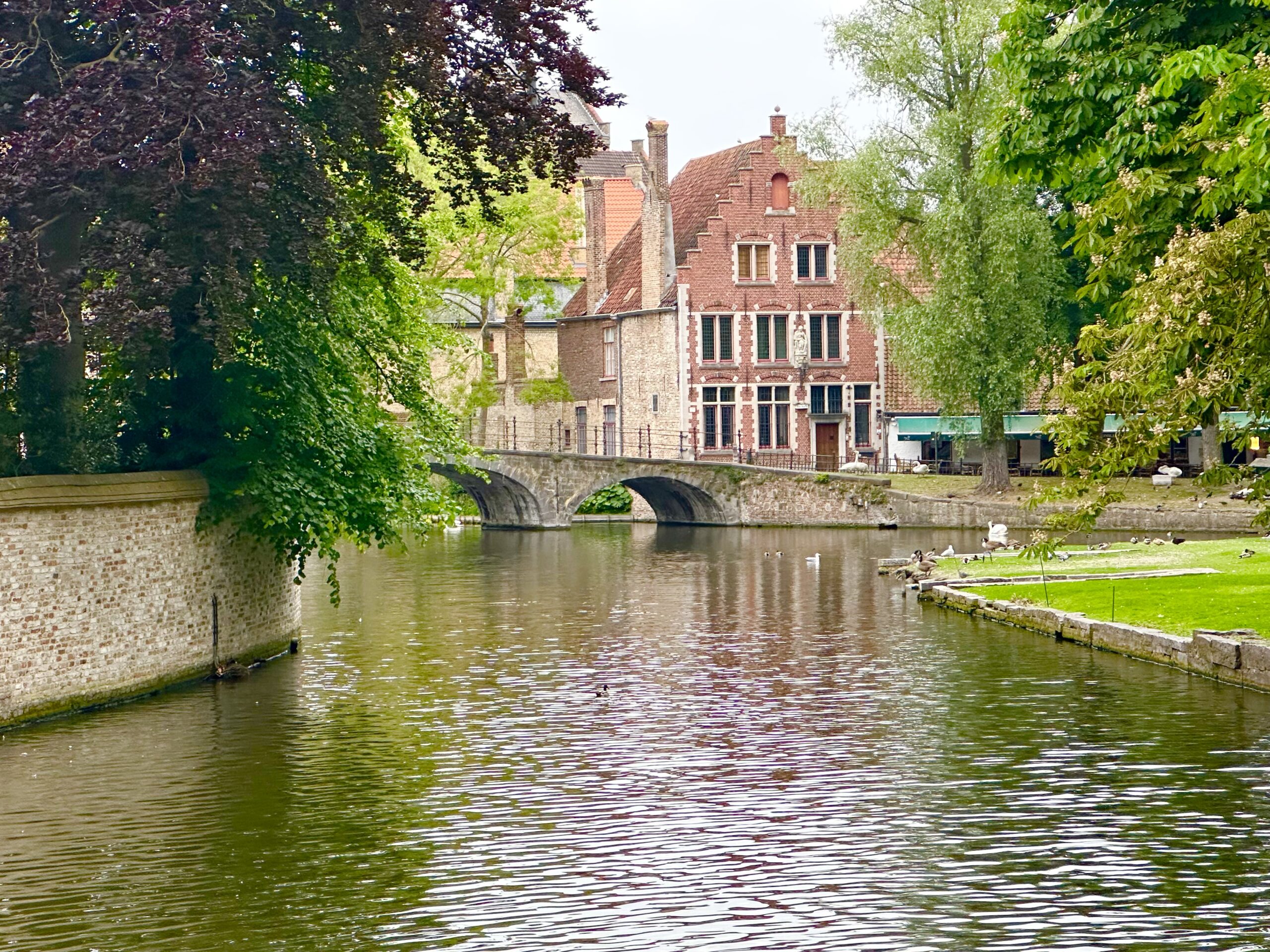

There are cities that feel like a step back in time, and then there’s Bruges—a perfectly preserved medieval gem nestled in the northwest of Belgium. With its cobblestone lanes, dreamy canals, stepped-gable houses, and chocolate-scented alleyways, Bruges is the kind of place that makes you believe in fairytales. Compact, walkable, and overflowing with charm, it’s an ideal destination for a romantic getaway, a cultural escape, or even just a really excellent waffle.

Here’s everything you need to know—and all the best things to do—when visiting Bruges.
Wander the Canals and Cobblestone Streets
Bruges is often called the “Venice of the North,” and it’s easy to see why. The city is laced with canals that mirror its centuries-old buildings and stone bridges. The best way to experience the atmosphere is simply to wander. Put the map away and let the city reveal itself. You’ll stumble across ivy-covered walls, secret gardens, and crooked streets that seem to exist in their own quiet rhythm.


Take a Canal Boat Tour
While exploring on foot is lovely, seeing Bruges from the water offers a whole new perspective. Boat tours last about 30 minutes and glide through the historic center, passing under bridges, by swan-dotted banks, and past stunning medieval facades. Most boats leave from jetties near Rozenhoedkaai, one of the city’s most photogenic spots.

Burg Square: Bruges’ Gothic Center
While Bruges is full of charming corners and quiet canals, nowhere captures the majesty and medieval drama of the city quite like Burg Square. Just a short walk from the more bustling Markt square, Burg is Bruges’ Gothic heart, and one of the oldest continuously inhabited spots in the region—dating back to the 2nd century.
Here, you’ll find yourself surrounded by ornate facades and soaring spires, each building telling its own story. The standout is the Stadhuis (City Hall), an architectural gem that has stood since 1376. Its delicate turrets, statues of biblical and historical figures, and elaborately carved stonework make it one of the most beautiful town halls in all of Europe. Step inside and you’ll find a grand Gothic hall with soaring ceilings and murals that bring Bruges’ golden age to life.

Next to the City Hall is the Basilica of the Holy Blood, a small, almost hidden church with outsized spiritual and historical importance. Inside, the upper chapel is richly decorated and houses a revered relic: a vial said to contain a few drops of Christ’s blood, brought to Bruges during the Crusades. Whether you’re religious or not, the atmosphere here is deeply moving and serene.

Burg Square is more than just a pretty place to pass through—it’s a setting that still feels alive with centuries of ceremony, governance, and ritual. Stand in the center and turn slowly to take it all in: the Flemish Renaissance palace, the gilded buildings, the whisper of horses’ hooves from nearby carriage tours. It’s a powerful moment that reminds you that Bruges isn’t just preserved—it endures.
Markt Square: The Bustling Center of City Life
While Burg Square feels steeped in Gothic mystique, Markt Square is where Bruges comes alive—a broad, open plaza that has been the city’s commercial and social hub for over a thousand years. This is where people gather, meet, and celebrate, and where you’ll truly feel the rhythm of the modern city pulsing through its medieval core.
Dominating the square is the Belfry of Bruges (Belfort), the 83-meter-high tower that once housed the city’s treasury and archives. Today, you can climb its 366 winding steps to the top for breathtaking panoramic views. Along the way, you’ll pass the old bell-ringer’s room and see the intricate mechanics behind the carillon, still ringing out over the city.
The square is ringed with colorful guild houses, many now operating as cafés and restaurants with perfect views of the action. It’s the ideal place to grab a seat, order a steaming bowl of moules-frites or sip a local Trappist beer, and watch the horse-drawn carriages clip-clop past.

Every Wednesday morning, the square transforms into a lively market, much like it did in the Middle Ages—complete with fresh produce, cheeses, meats, and flowers. Even on regular days, street musicians and performers often fill the space with music and energy.
Markt Square is where Bruges feels most open and festive, a true gathering place for locals and visitors alike. It’s the perfect starting point—or ending point—for any exploration of the city.
Climb the Belfry of Bruges (Belfort)
If you can handle 366 narrow, spiraling steps, you’ll be rewarded with a panoramic view over the rooftops of Bruges. The Belfry is a 13th-century bell tower that once symbolized the city’s independence and power. Inside, you can see the old carillon and massive bells that still chime across the city today. The climb is tight and steep—but well worth the effort.

Sample Belgian Chocolate (Everywhere)
Bruges is a paradise for chocolate lovers. The city is home to dozens of artisanal chocolatiers, and nearly every corner seems to offer handmade truffles, pralines, and chocolate-dipped fruit. Some favorites include Dumon, The Chocolate Line, and Chocolatier Spegelaere. Many shops let you watch the process or take a tasting workshop.
Tip: Look for places that make their chocolate on-site, and don’t be afraid to ask for a sample.

Eat Waffles, Frites, and Mussels
Belgium’s culinary reputation is strong, and Bruges is no exception. Try a Liège waffle (chewy and caramelized) or a Brussels waffle (light and crisp) from a street vendor or café. Pair it with whipped cream, strawberries, or Nutella for good measure.
For lunch or dinner, order a pot of moules-frites (mussels and fries), served with a cold local beer. Belgian frites are a point of national pride—twice-fried and best eaten with homemade mayo.
Explore the Begijnhof (Beguinage)
Tucked just outside the main tourist center, the Begijnhof is a serene cluster of whitewashed houses and a quiet courtyard once home to a community of lay religious women. Today it’s inhabited by Benedictine nuns, and the site remains a peaceful refuge of silence and simplicity. In spring, the lawns burst with yellow daffodils—one of the most magical sights in Bruges.

Discover the Groeningemuseum and Memling in Sint-Jan
If you love art, the Groeningemuseum is the city’s premier fine arts museum, featuring works from Flemish masters like Jan van Eyck and Hans Memling. For a more intimate experience, visit the Old St. John’s Hospital (Sint-Janshospitaal), where you’ll find another collection of Memling’s work, along with hauntingly beautiful religious artifacts in a medieval hospital setting.

Stop by the Church of Our Lady Bruges
Home to Michelangelo’s Madonna and Child sculpture—the only one to leave Italy during his lifetime—this 13th-century church is a must-see for art and history buffs. The white marble statue is strikingly graceful, and the church itself is a peaceful, awe-inspiring place to step out of the crowds.


Visit the Windmills on the City’s Edge
A short walk or bike ride from the center will take you to the eastern ramparts, where a handful of windmills stand guard along the old city wall. Some are still operational and open to visitors. It’s a quieter, more local part of Bruges with beautiful paths and green space.
Bruges at Night
One of the best things to do in Bruges is simply to walk after dark. Most cruise ships and day-trippers leave by early evening, and the city takes on an entirely different mood—quieter, darker, more mysterious. Reflections shimmer in the canals, the Belfry glows golden above the Markt, and you’ll have the streets mostly to yourself.
Grab a late drink at a cozy pub like Café Vlissinghe (the oldest bar in Bruges, dating to 1515) or ’t Brugs Beertje, which offers over 300 Belgian beers.

Logistical Tips for Visiting Bruges
- Getting There: Bruges is about 1 hour by train from Brussels. The train station is about a 20-minute walk or a quick bus ride from the center.
- Language: Dutch is the official language, but English is widely spoken.
- Best Time to Visit: Spring and fall are ideal for fewer crowds. December is also magical, with Christmas markets and twinkling lights.
- How Long to Stay: One full day is enough to see the highlights, but two to three days lets you slow down and enjoy the atmosphere without rushing.

Whether you come for the architecture, the art, the chocolate, or the quiet beauty of a canal at night, this little city has a way of stealing your heart.
Self-Guided Walking Tour of Bruges
Total distance: ~4 km (2.5 miles), mostly flat and pedestrian-friendly.
1. Start: Bruges Train Station
- If you’re arriving by train, this is your natural starting point.
- From here, follow the signs toward the city center, passing through Koning Albert I Park.
2. Begijnhof (Beguinage)
- Distance: ~10 min walk from station
- A serene complex of whitewashed houses, a small church, and peaceful courtyards.
- In spring, it’s famous for blooming daffodils.
3. Minnewaterpark (Lake of Love)
- Just beside the Begijnhof.
- Cross the Lover’s Bridge and watch the swans gliding by.
- One of the most photogenic spots in Bruges.
4. Church of Our Lady (Onze-Lieve-Vrouwekerk)
- Distance: 8 min walk
- Home to Michelangelo’s Madonna and Child.
- Beautiful Gothic architecture and a quiet garden nearby.
5. Gruuthuse Museum + Arentshof
- Adjacent to the church.
- A charming inner courtyard and garden with sculptures and canal views.
6. Bonifacius Bridge
- Just behind the Gruuthuse Museum.
- One of Bruges’ most romantic spots, often called the “most photographed bridge in Belgium.”
7. Rozenhoedkaai
- Distance: 5 min walk
- Classic Bruges postcard view: canals, spires, and reflections.
- Canal boat tours depart from here if you want to take a break from walking.
8. Burg Square
- Distance: 3 min walk
- Visit the Basilica of the Holy Blood, the Gothic Town Hall, and the Liberty of Bruges building.
- Rich in history and architecture.
9. Markt Square
- Distance: 2 min walk
- The heart of Bruges. Marvel at the colorful guild houses, grab a snack, and soak up the buzz.
- Climb the Belfry (Belfort) for panoramic views of the city.
10. Sint-Janshospitaal (St. John’s Hospital)
- Distance: 5 min walk
- Now a museum housing works by Hans Memling.
- Lovely mix of art, history, and medieval medical oddities.
11. Wollestraat + Shopping Loop
- From Markt, wander down Wollestraat and explore side streets like Steenstraat and Zilverpand for local chocolate, lace, and souvenirs.
- Grab some chocolates at The Chocolate Line or Dumon.
12. Jan van Eyckplein
- Distance: 10 min walk north from Markt
- Quieter square along the canal named for the famous painter.
- Beautiful in the late afternoon light, and near great cafes and art galleries.
13. Finish: Windmills and Kruispoort
- Distance: 15 min walk east along the canal
- Visit Sint-Janshuismolen, one of several historic windmills on the city’s edge.
- Quiet and scenic end to your walking tour.