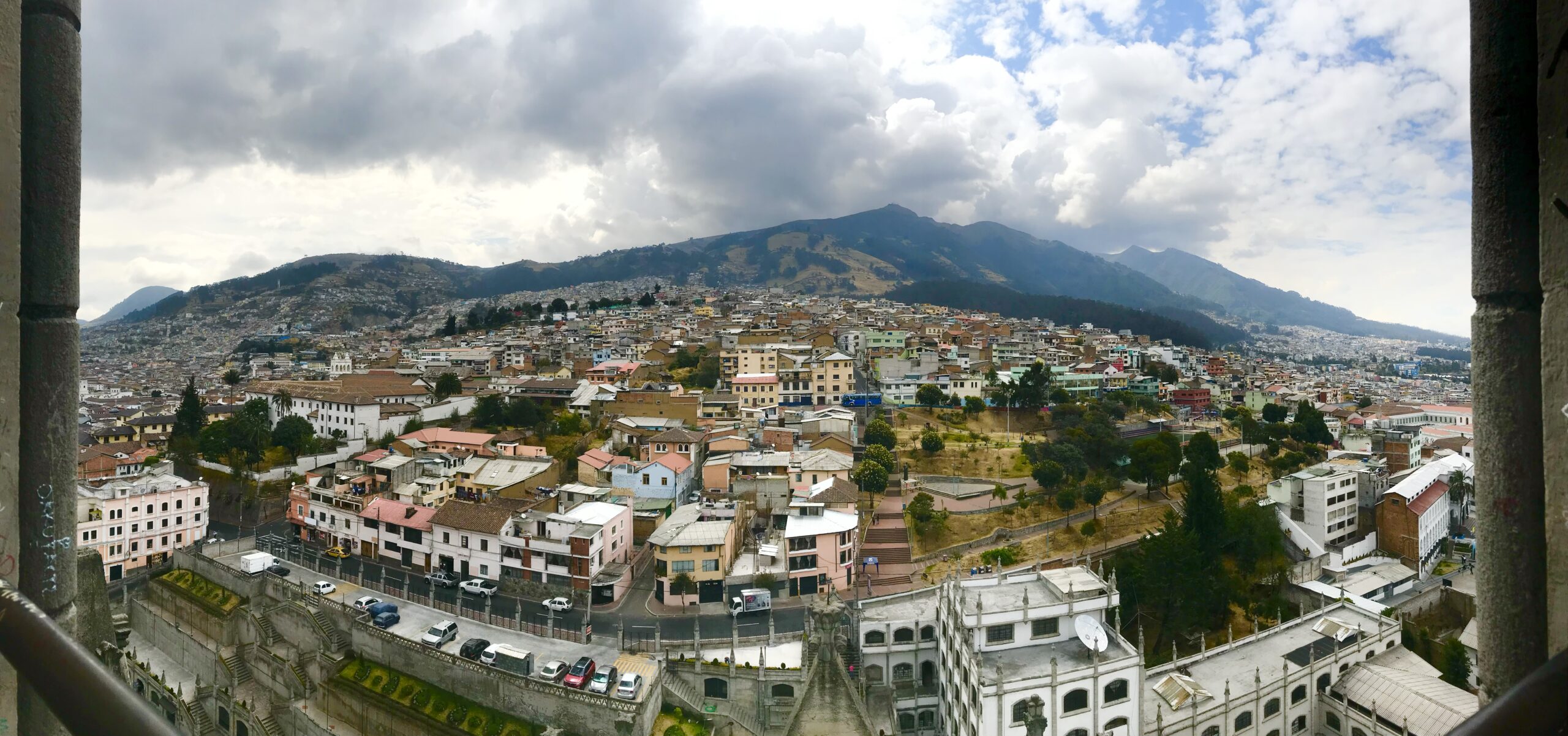


Perched high in the Andes, Quito is one of the most fascinating capitals in South America. Founded in the 16th century on the ruins of an Inca city, it quickly became an important colonial hub under Spanish rule. Today, its historic center—one of the first UNESCO World Heritage Sites—is a living museum. Its cobblestone streets, baroque churches, and well-preserved plazas carry centuries of stories.
The Altitude: How to Prepare
At 9,350 feet (2,850 meters), Quito is the second-highest capital city in the world, and its altitude is no joke. Smart travelers pack light layers, a reusable water bottle to keep hydrated, and sunscreen (yes, even when it’s cool—the sun is powerful at this elevation).
To acclimate, take it slow the first day. Walk instead of run, skip that first drink until your body adjusts, and keep hydrated. Coca tea is a local favorite for easing altitude effects—try it if you need a natural boost.

Discovering Quito’s Historic Center
The best way to experience Quito’s charm is by setting out on foot through its historic center, one of the largest and best-preserved in Latin America. Start your journey at Plaza de la Independencia (Plaza Grande), the city’s political and cultural heart. Here you’ll find the Presidential Palace, still the seat of government; the Archbishop’s Palace; and the Catedral Metropolitana de Quito, an impressive structure that was built on top of ancient Inca ruins. This layering of history—where colonial architecture literally rests on the foundations of a once-thriving Inca city—symbolizes Quito’s unique blend of civilizations.
From there, wander a few blocks to La Compañía de Jesús, the Jesuit church often called the “Golden Church.” Its walls, altars, and domes are covered in nearly two tons of gold leaf. This makes it one of the most dazzling examples of Baroque architecture in the Americas. Each detail was carved by indigenous artisans, blending European artistic traditions with native symbolism. A visual reminder of Quito’s cultural fusion.
Next, head toward the San Francisco Monastery, the oldest and largest religious complex in the city. Dating back to 1535, it sits on land that was once an Inca temple. Inside, you’ll find a museum of colonial art and courtyards that offer calm away from the city bustle. San Francisco is often called “El Escorial of the New World,” underscoring its significance in colonial religious and cultural life.
Don’t miss the chance to walk down La Ronda, one of Quito’s oldest streets. Lined with colorful houses, artisan shops, and cozy cafés, it’s a lively place both day and night. Just beyond, if you’re curious to trace Quito’s deeper history, ask a guide to lead you to the old Inca stone walls that still exist in parts of the historic district. These stones, cut and fitted without mortar, demonstrate the remarkable engineering of the Inca. They remind you that beneath the Spanish colonial facades, a much older city still endures.

Quito’s Food Scene
Food is at the heart of Quito’s culture. Adventurous eaters shouldn’t miss cuy (guinea pig), a traditional Andean delicacy often served roasted. For something sweeter, Ecuador is famous for its world-class chocolate. Quito offers plenty of shops where you can taste everything from rich hot cocoa to artisanal bars.
Some standout restaurants to try:
- Urko Cocina Local – seasonal Ecuadorian tasting menus.
- Zazu – fine dining with a modern twist on local flavors.
- La Purísima – stylish, creative dishes in a chic setting.
If you want a hands-on experience, join a cooking class. Several local chefs offer lessons on how to make empanadas, ceviche, and traditional soups, giving you a delicious souvenir of your trip.
Basílica del Voto Nacional & Climbing the Condor Tower
One of Quito’s architectural gems is the Basílica del Voto Nacional, a sweeping neo-Gothic church whose construction began in 1883. Modeled in part on European cathedrals like Notre Dame, it’s the largest neo-Gothic basilica in the Americas and it still isn’t fully finished.

If you have the energy, the highlight is climbing up to its towers—especially the Torre del Cóndor (Condor Tower). Visitors enter via a separate ticket from the main basilica entrance. The ascent involves a mix of staircases, narrow walkways, and a few steep ladders near the top. There’s also a wooden bridge and attic-like roof walkways to cross, plus some exposed ladders that can feel a little daring.

The payoff? Incredible 360-degree views over Quito. From up there you’ll see the sprawl of the Old Town, distant volcanoes on clear days, and of course, the Virgen del Panecillo standing proud in the skyline. Just be prepared: wear good shoes, go slowly, and make sure you’re comfortable with heights. The final ladders, especially, are not for the faint of heart—but for many travelers, the view (and the adventure) are more than worth it.


Shopping in Quito
Quito is a shopper’s delight for those who love markets and local crafts. Head to the open-air food and spice market to experience the colors, aromas, and energy of daily life. Here you’ll find everything from fresh tropical fruit to Andean spices. For artisan goods, look out for alpaca scarves, handwoven textiles, and carved wooden crafts. Many workshops and shops support indigenous communities, making your purchases both meaningful and memorable.
A Perfect Day in Quito
Morning: Plaza Grande and the Historic Center
Start your day in the heart of Quito’s historic center at Plaza Grande. Soak in the energy of the square, watch locals go about their day, and admire the surrounding landmarks like the Presidential Palace and the Archbishop’s Palace. Duck inside Hasta La Vuelta, Señor for a hearty Ecuadorian breakfast. Think humitas (steamed corn cakes) or bolón de verde (a plantain and cheese dumpling).
From here, begin your walking tour. Visit La Compañía de Jesús, the breathtaking gold-leafed baroque church. Then continue to San Francisco Monastery, where you can explore both the church and its lively plaza. Don’t miss a quick stop at Heladería San Agustín for a midday treat of exotic Ecuadorian ice cream flavors.
Midday: Cathedral, Inca Ruins, and Lunch
As you continue, step inside the Cathedral of Quito, built directly atop Inca ruins, a vivid reminder of the city’s layered history. Wander toward the narrow streets where remnants of Inca stone walls still stand. It’s humbling to walk where two great civilizations literally intersect.
For lunch, head into Tianguez Café & Restaurant, located under the arches of San Francisco Monastery. Here you can savor seco de chivo or ají de gallina while browsing fair-trade artisan goods in the attached shop.
Afternoon: Museums and Markets
After lunch, stroll down to La Ronda, Quito’s most charming old street. By day, it’s quiet and atmospheric, with art galleries, small cafés, and colorful balconies. From there, take a short taxi ride to the Museo de la Ciudad, housed in a former hospital. The Museo beautifully tells Quito’s story from pre-Columbian times to the modern day.
If time allows, explore one of Quito’s open-air food and spice markets. The Mercado Central is a feast for the senses—piles of tropical fruits, spices, and herbal remedies line the stalls. It’s a great spot for tasting local flavors and picking up gifts like handmade chocolates.
Evening: Dinner and Quito by Night
As the sun sets, return to La Ronda, which transforms into one of Quito’s liveliest evening spots. Start with dinner at La Ronda Restaurant, where you can enjoy classic Ecuadorian dishes in a warm colonial setting. We also really loved the Jumandy Organic Garden Restaurant on La Ronda which served fantastic food and fun, flaming desserts.

Or, if you prefer, stop into Dulce Placer for a dessert of empanadas de viento dusted with sugar, or head to Yumbos Café for a steaming cup of Ecuadorian hot chocolate—served the traditional way, with a slice of cheese.
End your day by strolling La Ronda’s lantern-lit streets. You’ll find live music drifting from balconies and bars, and the atmosphere is both festive and intimate. It’s the perfect way to cap off a day spent discovering the very best of Quito.

Visiting the Equator: Is It Worth It?
Quito is one of the few capitals in the world that sits right on the line dividing the hemispheres. The most famous site is Mitad del Mundo (Middle of the World), about 30 minutes north of the city. Here you’ll find the iconic monument where travelers straddle the line with one foot in the northern hemisphere and the other in the southern. It’s touristy, yes, but undeniably fun for the photo ops.

If you’re looking for something more authentic and science-based, head next door to the Intiñan Solar Museum. This is located at the “true” equatorial line (determined by GPS). The museum offers quirky demonstrations like balancing an egg on a nail or watching water swirl in different directions depending on which side of the line you’re standing.

A visit to the equator typically takes about half a day, including travel time from Quito, so it’s easy to fit into a morning or afternoon without rushing.
Is it worth the trip? Absolutely—especially if it’s your first time in Ecuador. It’s a short, inexpensive excursion from Quito, and even if the science is a little showy, the cultural exhibits and playful experiments make for a memorable half-day adventure.
Closing Thoughts
Visiting Quito is a journey into history, altitude, flavor, and creativity. Whether you’re wandering the colonial streets, sipping chocolate in a cozy café, or haggling for spices in the market, the city rewards every step with authenticity and warmth. Come prepared, take it slow, and let Quito reveal its magic—it’s a destination that lingers long after you leave.