
Western Turkey is where layers of history rise from the landscape. From the minarets of Istanbul to the broken columns of ancient Ionian cities, all the way to the sun-drenched shores near the Greek islands. For travelers who want to go beyond the beaches and bazaars, Turkey offers a cultural journey rich in architecture, mythology, and timeless beauty. Here’s a look at some of the most remarkable highlights to visit, each one a chapter in Turkey’s fascinating story.
Istanbul: Where Continents and Civilizations Collide
Few cities in the world match the energy and grandeur of Istanbul, where East meets West across the Bosphorus. Once known as Byzantium and Constantinople, this former capital of three empires is layered with millennia of architecture, culture, and religious legacy.
Wander through Sultanahmet, where the Hagia Sophia and Blue Mosque stand within sight of one another. They are two domed masterpieces that define the skyline. Dive into the rich history of the Topkapi Palace, where Ottoman sultans ruled an empire. Take a stroll through the labyrinthine Grand Bazaar, one of the oldest and largest covered markets in the world. Don’t miss a boat ride on the Bosphorus at sunset, which offers a sweeping view of palaces, mosques, and the ever-shifting life along the strait. Istanbul is not just a city you see; it’s one you feel.

Selçuk: Gateway to Antiquity and Turkish Heritage
Once you head south, a perfect village to choose for the next few days is Selçuk. A small town with outsized historical importance, Selçuk serves as the perfect base for exploring nearby ancient sites. But it offers plenty to see in its own right. The Isa Bey Mosque, dating to the 14th century, is a beautiful example of Seljuk architecture. It is built from repurposed stone from Roman and Byzantine ruins.
Above the town, the Ayasuluk Fortress and St. John’s Basilica dominate the skyline. The basilica was built on the believed burial site of the Apostle John and offers excellent views over the countryside. Selçuk is also home to the Ephesus Museum, which holds many treasures excavated from the nearby ruins. Here you will see statues, sarcophagi, and sacred objects from the Temple of Artemis.


Ephesus: Walking the Streets of an Ancient Powerhouse
Ephesus is without question one of the crown jewels of the ancient world. Once a bustling Roman metropolis of over 250,000 people, it now stands as an open-air museum of astonishing preservation and scale. Here, history isn’t imagined—it’s walked, touched, and felt.

The Library of Celsus, the Great Theater, and the Terrace Houses are just a few highlights. This is a city that offers one of the most immersive archaeological experiences anywhere. The marble-paved streets, lined with remnants of shops and statues, give a real sense of urban life in antiquity. Plan to spend hours here. If possible, arrive early or stay late to avoid the tour groups. Bask in the golden light that gives the ruins their timeless glow.

The Temple of Artemis: A Wonder Reduced, But Not Forgotten
Just outside of Selçuk stands what remains of the Temple of Artemis. This is, astonishingly, one of the Seven Wonders of the Ancient World. Today, only a single column and a scattering of stone blocks remain, but its symbolic importance is profound.
In its heyday, the temple was one of the largest and most lavish structures ever built. Not just in western Turkey, but anywhere in the known world. Dedicated to the goddess Artemis, it served as a major religious and economic center. Though little survives, visiting the site provides a sense of continuity with ancient grandeur. And it invites reflection on how time reshapes even the greatest of human creations.

Priene: The Ideal Ancient City
Tucked into a pine-covered hillside near the Aegean coast, Priene is a remarkably well-preserved example of an ancient Greek city planned on a grid system. It is one of the best surviving expressions of early urban design.
Though less visited than nearby Ephesus, Priene rewards those who explore it with a quiet, contemplative atmosphere. The Temple of Athena, designed by the famed architect Pytheos, is the centerpiece, offering views across the Meander River valley. The remains of private homes, a bouleuterion (council chamber), and the theater—carved right into the slope of the hill—reveal what daily life might have looked like in western turkey in the 4th century BCE. It’s a perfect stop for travelers who want to walk ancient streets without the crowds.


Didyma: Oracle of Apollo and Columns That Stagger the Imagination
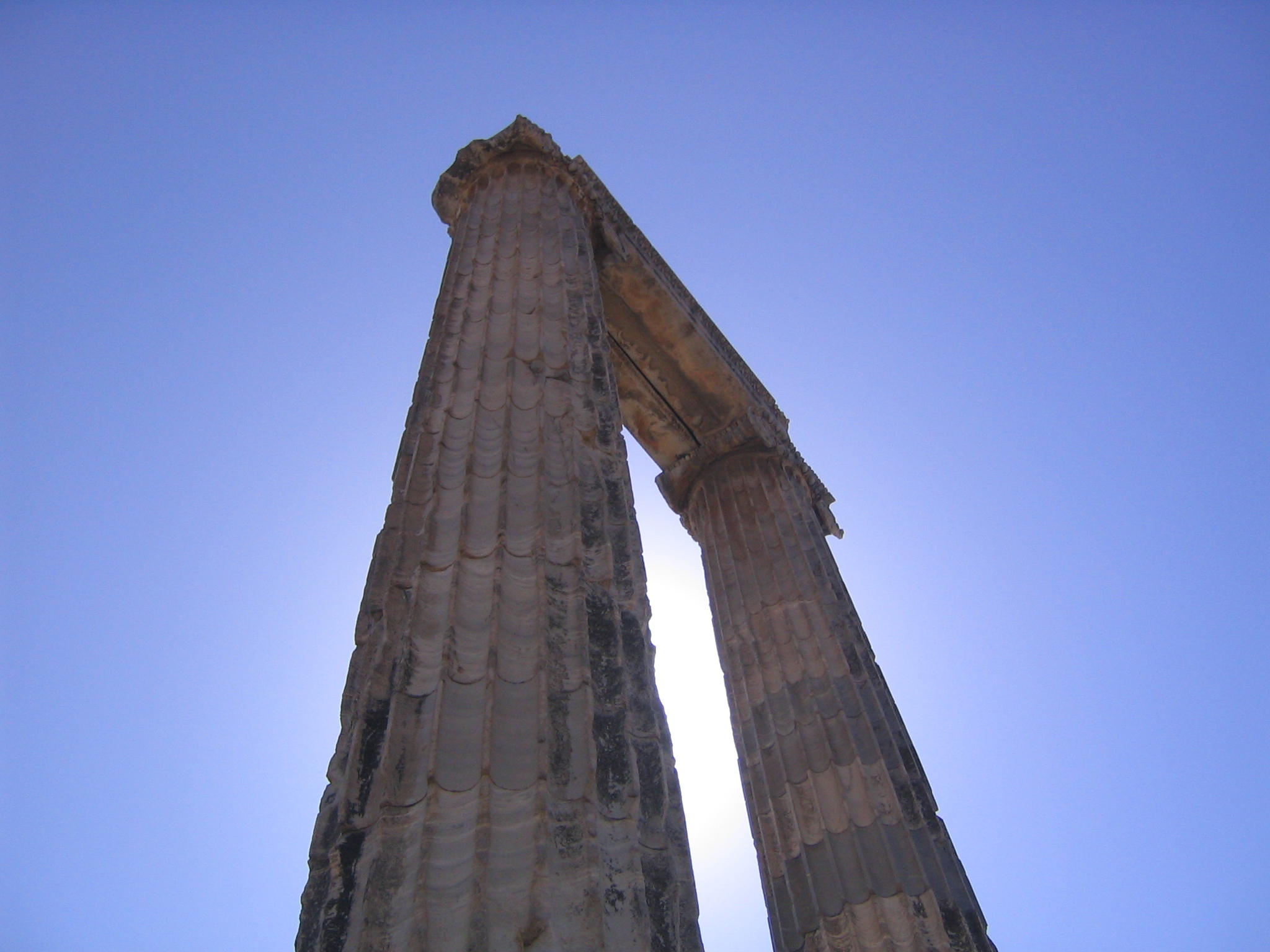
Not far from Priene lies Didyma, home to one of antiquity’s most important oracle sites. Here lie the spectacular ruins of the Temple of Apollo. This temple was never fully completed, but its scale is still awe-inspiring. Towering columns (many still standing), with massive carved bases, and a sacred passage that once led priests and pilgrims to the inner sanctuary.
Didyma was a place of prophecy second only to Delphi. Walking through the remains, it’s easy to feel the weight of mystery and power that once permeated this sacred site. The intricacy of the stone carving, including Medusa heads and floral motifs, speaks to the skill of Ionian artisans. It also reveals the ambition of the city-states that built such monuments.


Miletus: A Center of Science and Philosophy
Miletus was once a thriving port in western Turkey and one of the most influential cities in the ancient world. It is known for producing great thinkers like Thales and Anaximander, early pioneers of science and mathematics. Though the sea has since receded, the city’s layout and ruins remain deeply evocative.
The highlight here is the Great Theater, capable of holding 15,000 spectators and still largely intact, giving a vivid sense of scale. You can also explore Roman baths, agoras, and temples spread across the sprawling site. Miletus is especially interesting for travelers intrigued by the intellectual legacy of the ancient world. It was, after all, the birthplace of Western philosophy.

Hieropolis
A day trip to Hierapolis from Selçuk is a long but rewarding adventure for history and nature lovers alike. While Selçuk is best known as the gateway to Ephesus, it also makes a feasible base for travelers willing to spend a day exploring the spectacular ruins and natural wonders of Pamukkale and Hierapolis. The journey is roughly 3.5 hours by car (each way). So it’s best to start early in the morning to make the most of your time.
Once you arrive, you’ll be greeted by the dazzling white travertine terraces of Pamukkale. You can climb barefoot to reach the plateau where Hierapolis begins.

Spend the afternoon wandering through the city’s remarkably preserved ruins: the vast necropolis, the Roman theater with sweeping valley views, and the ancient baths that once welcomed weary travelers and pilgrims. Don’t miss the chance to take a dip in Cleopatra’s Pool, a thermal spring filled with submerged columns and warm mineral water.
It’s a full day of sightseeing, so be sure to bring water, sun protection, and comfortable shoes. While it’s possible to return to Selçuk in the evening, some travelers opt to spend the night in nearby Pamukkale village or Denizli. This breaks up the journey allowing you to enjoy the region at a more relaxed pace. Whether as a power-packed day trip or the start of a new leg of your itinerary, Hierapolis is well worth the journey.


Samos Island: A Greek Interlude Just Across the Water
While not part of western Turkey, the nearby Greek island of Samos is easily reached by ferry from Kuşadası or Seferihisar. It makes a fascinating cultural counterpoint. Samos was the birthplace of Pythagoras and Epicurus. Its ancient legacy includes temples, aqueducts, and archaeological museums that rival those on the mainland.
The island’s seaside villages—like Pythagorio and Kokkari—offer relaxed charm, great food, and sparkling waters, making it a rewarding day trip or overnight escape. It’s a place to slow down and reflect after the monumental ruins and intensity of western Turkey’s ancient cities.

Final Thoughts
Visiting Western Turkey and its highlights is like flipping through the pages of an epic historical novel. Each destination—be it an Ottoman palace, a ruined Ionian temple, or a modern Turkish town—offers a different voice in the country’s vast and layered story. Whether you’re drawn to mythology, architecture, philosophy, or simply the thrill of walking where empires once rose and fell, this region delivers depth, beauty, and a sense of timeless discovery.