
Spending a Week in Sri Lanka: Waterways, Rock Fortresses, Elephants, and Beaches
Sri Lanka may be small in size, but it holds an immense variety of landscapes, cultures, and experiences. From misty highland temples to sun-bleached southern beaches, from ancient kingdoms to wildlife-rich jungles, the country offers a deeply textured journey through history, hospitality, and natural beauty. Traveling across the island in just a week is entirely possible—and deeply rewarding. As long as you travel smart, move efficiently, and embrace the pace of local life.
Getting Around Sri Lanka
The most comfortable way to explore Sri Lanka in a short time is with a private driver. You can hire one in advance or arrange through your hotel. The typical cost is between $50–$70 USD per day, including fuel and the driver’s accommodation. Having a driver lets you cover more ground without stress. And it opens up access to lesser-known places that are harder to reach by public transit. Plus, your tourism dollars go directly to local families. While buses and trains are an option (and scenic), they require more flexibility than a tightly packed itinerary allows.
Distances across the island are short in kilometers but long in time. Winding roads, slow traffic, and the occasional herd of cows mean that a 100-km drive could take 3–4 hours. It’s all part of the experience, and the views along the way are rarely dull.
Gampaha District: A Quiet Start on the Water
Just outside Colombo and near the international airport, Gampaha District offers a peaceful start to any Sri Lankan journey. This region is dotted with canals, lagoons, and rivers that feed into the sea. Staying at a waterfront guesthouse or boutique hotel gives you a front-row seat to village life. Early mornings are filled with birdsong and the rhythmic splash of oars as fishermen paddle past. It’s a gentle introduction to the country. A place where you can adjust to the humidity, sip tea on a shaded veranda, and listen to the rustle of palm fronds overhead.

Negombo: Coastal Culture and Colonial Charm
Close to Gampaha and the airport, Negombo is a beachside town known for its laid-back vibe and vibrant fishing scene. Along the Dutch canal, boats pass under stone bridges, and the fish market is one of the liveliest in the country. It is best visited early in the morning when the catch is fresh and the auction is fast-paced and loud.
Negombo also has a colonial past that lingers in its churches and architecture. You’ll find broad beaches, colorful sails on the horizon, and a good selection of cafes, shops, and seafood restaurants. It’s a casual place, perfect for easing into your travels or decompressing at the end.


Negombo is also a deeply religious area. Often called “Little Rome” of Sri Lanka, it is famous for its rich religious heritage, with dozens of ornate Catholic churches reflecting the area’s deep Christian influence alongside vibrant Buddhist and Hindu traditions. When we were there, it was just before Easter, and everyone was busy preparing for the Duwa Passion Play. This is an elaborate and dramatic re-enactment of the Passion of Jesus Christ that has become a well-known local tradition.
Sigiriya: The Rock Fortress in the Sky
Driving time from Columbo or Negombo: 3.5 to 4 hours
One of Sri Lanka’s most iconic landmarks, Sigiriya rises nearly 200 meters from the forest floor like something from a lost world. The ancient rock fortress was once the royal citadel of a 5th-century king, Kashyapa, who overthrew his father to take the throne. Kashyapa moved his palace to Sigiriya and transformed the natural rock into a fortified city, building a palace on the summit along with elaborate gardens, moats, and pools. It is now a UNESCO World Heritage Site that draws travelers from around the globe.
The climb to the top is steep but broken up with wonders. There are frescoes painted in sheltered alcoves, mirror-like rock walls, and the massive lion’s paws carved at the mid-way platform. From the summit, views stretch endlessly over jungle and plains. It’s not just the engineering that amazes, but the boldness of placing an entire palace atop a rock in the middle of nowhere.


Staying With a Local Family and Learning to Cook
One very interesting and meaningful way to connect with Sri Lankan culture is by staying with a local family in a village near Sigiriya or Dambulla. Many families open their homes to guests, offering simple but comfortable rooms, home-cooked meals, and the chance to see what daily life is like beyond the tourist trail.
Some offer traditional cooking lessons alongside your hosts. You can grind local spices, chop coconut, while learning the secrets of a good dhal curry or hoppers. This is not just a culinary lesson, but a cultural exchange. You’ll hear stories, learn about traditions, and maybe even join in for a game of carrom or an evening walk through the fields.
Our hosts lived next to a small pond and we rowed a traditional Sampan style boat, drove a tuktuk, and climbed up a coconut tree to retrieve the coconut ingredient for dinner.


Treehouses and Elephants in the Jungle
Driving time from Sigiriya area to Habarana or Minneriya: 30–45 minutes.
Driving time to Wasgamuwa National Park: about 2 hours.
For a night tucked away in nature, stay in a treehouse lodge near Habarana or one of the central reserves. Elevated among the trees, these rustic but magical stays often have open walls, mosquito nets, and hammocks with jungle views.
Nearby, you can visit elephant conservation projects or take a safari into Minneriya National Park or Hurulu Eco Park. Here elephants move freely through open grasslands and forest. It’s not uncommon to see an entire herd—mothers, calves, and solitary bulls—just feet away from your jeep, grazing peacefully or rolling in the mud.


Dambulla: The Royal Cave Temples
Driving time from Habarana or Sigiriya: 30–40 minutes
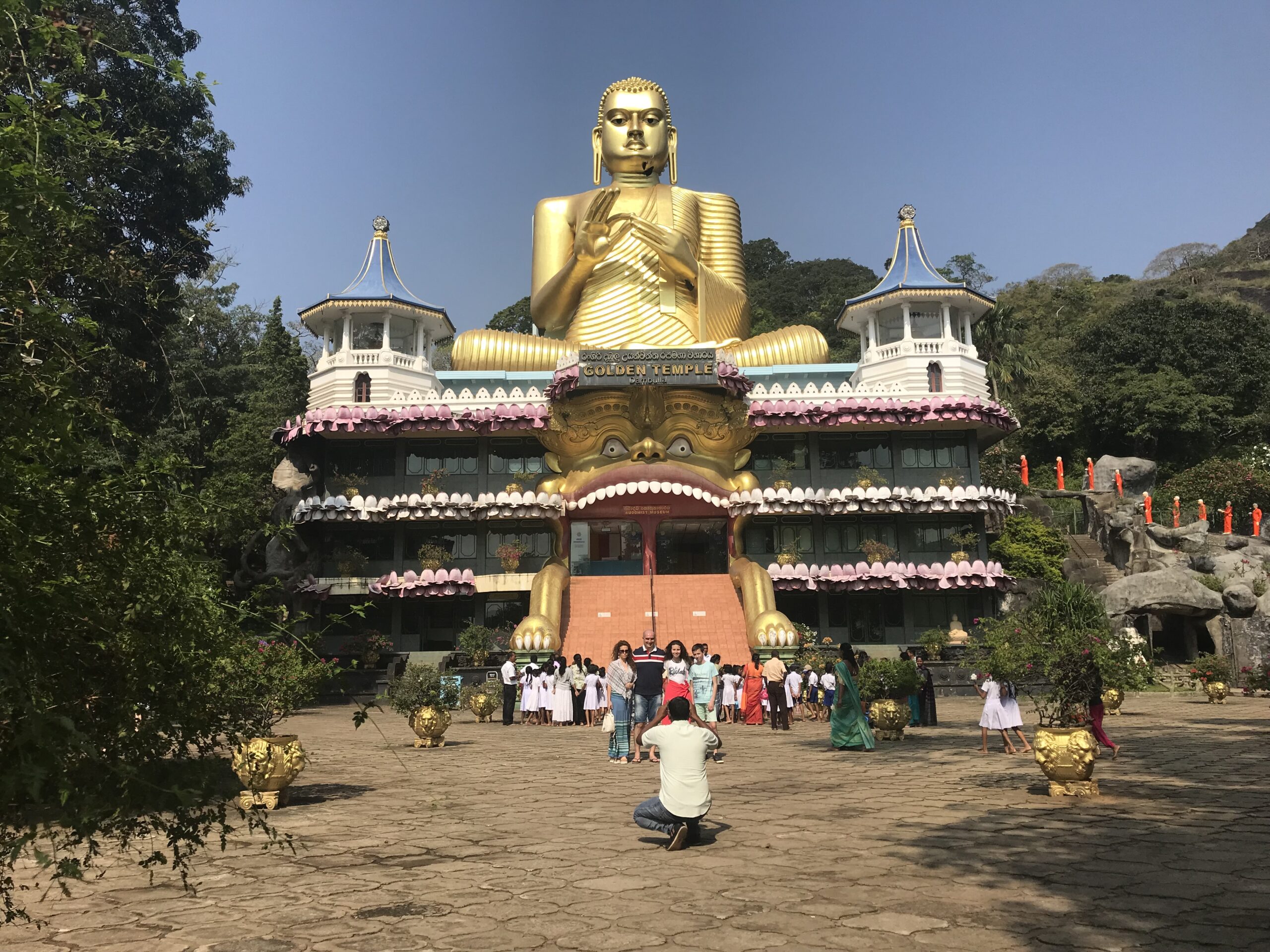
Carved into a rock bluff high above the countryside, the Dambulla Cave Temples are one of Sri Lanka’s oldest and most visually striking religious sites. Inside five interconnected caves are over 150 Buddha statues and vibrant murals painted across ceilings and walls.
Climbing up to the site, you’ll be greeted by cheeky monkeys and panoramic views. Once inside, the cool stone chambers feel like sacred time capsules—still, quiet, and imbued with centuries of devotion. This is a place of ongoing worship, not just a museum, and the sense of reverence is palpable.


Kandy: Culture and Hillside Majesty
Driving time from Dambulla to Kandy: 2 to 2.5 hours
Nestled among the hills, Kandy is a lively cultural hub and a favorite with travelers seeking cooler air and rich traditions. The city’s centerpiece is the Temple of the Tooth, which houses a sacred relic of the Buddha and draws thousands of pilgrims each year. Around the lake, colonial-era architecture meets bustling markets and tuk-tuk chaos.
Kandy also serves as a jumping-off point for nearby tea plantations and forest walks. It has a bit of everything—history, nature, and urban energy—all wrapped in a mountain setting that slows everything down just a little.


Royal Botanic Gardens in Peradeniya
Driving time from central Kandy: 20 minutes
A short drive from Kandy, the Royal Botanic Gardens are a vast and verdant escape. Wide paths lead through towering palms, spice groves, orchid houses, and giant bamboo stands. The gardens are beautifully maintained and offer a chance to learn about Sri Lanka’s plant life while simply enjoying the shade.
One of the most memorable features is the massive colony of fruit bats hanging like black drapery from the tall trees. You’ll hear their chatter before you see them. On the ground, mischievous monkeys, often with tiny babies clinging to their bellies, swing from tree to tree or sneak snacks from unsuspecting visitors.


Southern Province: Beachfront Beauty
Driving time from Kandy to Unawatuna or Galle: 5.5 to 6 hours
Sri Lanka’s south coast is a long sweep of golden beaches, turquoise surf, and palm-shaded hotels. Whether you’re in Unawatuna, Mirissa, or Tangalle, there’s a place to stretch out a towel, order fresh seafood, and do very little with full intent.
Luxury hotels with open-air verandas, yoga classes, and oceanfront pools dot the coastline, offering a restorative end to a busy journey. Walk the beach at sunrise, take a dip in warm water, or simply nap under a frangipani tree with the sounds of waves in the background.


Galle: Fort Walls, Baby Turtles, and Snake Charmers
Driving time from Unawatuna to Galle: 15–20 minutes
Galle is a beautifully preserved colonial port city. It is ringed by stone ramparts and home to a warren of shops, cafes, and quiet streets. At sunset, walk along the fort walls to the lighthouse where the sea breeze picks up and locals gather to fly kites or watch the waves crash below.
You might even stumble upon a snake charmer, coiled cobra and all, performing near the gate. Just beyond Galle, several turtle conservation centers allow visitors to release baby turtles into the ocean at dusk—an experience both heartwarming and humbling.
Inside the fort, don’t miss the boutiques and art galleries, many housed in restored colonial buildings. Shop for handmade jewelry, linen clothing, rare teas, and paper goods before grabbing a gelato or curry lunch at one of the trendy courtyard cafés.


Colombo: One Last Taste
Driving time from Galle to Colombo: 2–2.5 hours (via expressway)
Before heading home, return to Colombo for a final night. While many travelers skip the capital, it’s worth visiting for a taste of urban Sri Lanka. You can visit slick restaurants, colonial mansions, street food stalls, and stylish rooftop bars.

Celebrate your last evening with an unforgettable dinner. For something elevated, try Ministry of Crab, a now world-famous restaurant specializing in giant lagoon crabs. Or enjoy a buffet of Sri Lankan dishes at Nuga Gama, tucked beneath a banyan tree. However you end it, finish with one last cup of strong Ceylon tea or a fresh king coconut under the stars.

From rock fortresses to rice paddies, elephants to sea turtles, temples to tropical beaches—Sri Lanka is a country of remarkable layers. One week offers only a glimpse. But it’s a powerful one: vivid, joyful, and filled with the kind of beauty that seeps into memory and lingers.