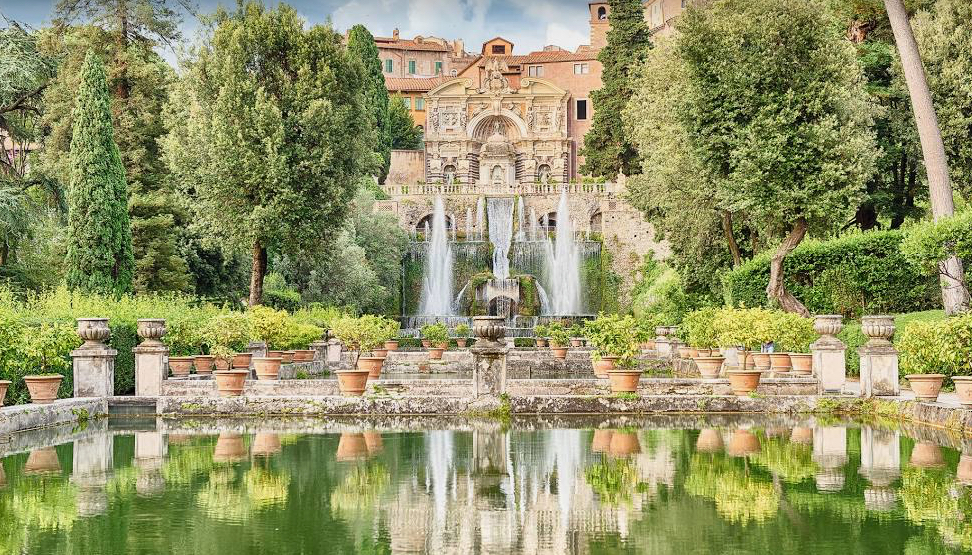


Tivoli can be a day trip from Rome. But if you have some time, you may wish to spend a night or two. It’s a destination that deserves several days to appreciate its layers of history, natural beauty, and quiet charm. Nestled in the hills of Lazio, this UNESCO World Heritage designated town has long been a retreat for emperors, cardinals, and artists looking to escape the intensity of the city. Over the course of a few days, we wandered through extravagant Renaissance villas and manicured gardens, stood in the ruins of Roman palaces, and enjoyed elegant lunches overlooking the valley below.
Spending two to three days in Tivoli gives you the chance to explore not just its celebrated villas but also its public parks, scenic countryside, and excellent local cuisine. Here’s how we made the most of our time in this timeless Italian hill town.
Day 1: Villa d’Este and Villa Gregoriana – Water, Gardens, and City Views

When we arrived in Tivoli, we walked from the train station straight to the dazzling Villa d’Este. This is one of the most celebrated examples of Renaissance garden design in all of Europe. It was originally built in the 1500s for Cardinal Ippolito II d’Este. The villa’s fountains and terraces unfold down the hillside in dramatic layers of green, stone, and water.
Start inside the villa and wander through the rooms, each unique, surprising and wonderful. The villa’s upper halls offer frescoed rooms and sweeping views of the gardens below—and far off toward Rome on the horizon.


When we finished meandering through the villa, we wandered the the famous garden. There are a number of fountains and water features throughout the garden. You’ll want to stroll along the famous Hundred Fountains, and marvel at the elegant Fountain of Neptune. Most impressively, the Organ Fountain has an hourly performance, where the water pressure itself triggers a hidden pipe organ to play.


After lunch, we walked to Villa Gregoriana, Tivoli’s atmospheric public park and natural reserve. Unlike the carefully constructed geometry of Villa d’Este, this park is wild and romantic. It is centered around the Great Waterfall (Cascata Grande) that crashes dramatically into a gorge. Along the trail, we found ancient temples, shaded caves, and beautiful overlooks. It felt like a forgotten world hidden just beneath the town.

Day 2: A Day in the Countryside at Hadrian’s Villa
You can spend a second whole day venturing just outside the city center to explore Villa Adriana (Hadrian’s Villa). This is one of the most ambitious and expansive architectural projects of the Roman Empire. Built by Emperor Hadrian in the 2nd century AD, (yes, the same emperor who built the Pantheon and the Castel Sant’Angelo in the center of Rome, and his famous wall in Britain) this sprawling estate is more like an open-air museum of imperial grandeur. And it came complete with libraries, baths, temples, and gardens.
We started at the Canopus, a long reflecting pool bordered by statues and columns. The Canopus is thought to be inspired by Hadrian’s travels in Egypt. Then we explored the Maritime Theater, a small and private retreat encircled by a moat, and stood in the remnants of the libraries where Hadrian once read and wrote.

We easily spent most of the day here, taking breaks under olive trees. It is not hard to picture what life must have been like in this countryside palace. The grounds are expansive and mostly open-air, so comfortable shoes, sunscreen, a hat and water are musts—especially in warmer months.
Explorations of Local Flavor
Tivoli shopping areas can be bustling during tourist season and on weekends, but it can also be charming and quiet. Wander through some of the ancient narrow streets and small piazzas for local color. Or hit the park at sunrise before the crowds arrive. Explore artisan shops or stop for an espresso.

Where to Eat
Try Ristorante Sibilla for an amazing and wonderful lunch. Everyone from Princess Margaret to Yoko Ono has dined at this restaurant, which is poised on top of the acropolis and overlooking the famous Temple of Vesta, with views in every direction. This place is one of the most amazing dining experiences anywhere and the outstanding food is not outrageously expensive. Try the fresh pasta with truffles.
Another favorite spot was Antica Trattoria del Falcone, a family-run trattoria known for its traditional Roman countryside dishes like gnocchi alla tivolese and local wines.
Practical Tips and Recommendations
When to Go: Spring and early fall offer the best weather and lighter crowds. The fountains and gardens are especially beautiful when everything is green and blooming.
Opening Days:
- Villa d’Este is open Tuesday to Sunday (closed Mondays), from 8:45 am to 6:45 pm (last entry at 5:45 pm).
- Villa Adriana is open daily, typically from 8:30 am until one hour before sunset.
- Villa Gregoriana is open Tuesday to Sunday and closed Mondays; hours vary by season.
Where to Stay: Consider booking a boutique hotel or historic B&B in the old town. Many offer charming views and are within walking distance of all the main attractions.
Getting There: From Rome, take a regional train from Termini or Tiburtina station to Tivoli (about an hour), or arrange a car rental for easier access to Hadrian’s Villa and the surrounding countryside.
Final Thoughts
What makes Tivoli special is partly the grandeur of its UNESCO World Heritage Sites. It is also in the way the town encourages wandering, so you can imagine centuries of history unfolding in every corner. If you can spare the time, plan for an extra day here. With two or even three days, you can immerse yourself in both the artful excess of the Renaissance and the austere splendor of ancient Rome, all within the gentle hum of a thriving Italian hill town, which has been a center for the elite for over 3000 years.