
A Guide to Visiting Sintra: Palaces, Legends, and Lush Hills
Sintra is only about 30 minutes by car from Lisbon, so it makes a perfect day trip. But if you have time to spend a night, there are so many things to do and see to keep you busy! Sintra is a lovely city jam packed with beautiful palaces and elegant estates.
If you have 24 hours to spend, make sure to visit the Palacio Nacional De Sintra, as well as the Palacio Nacional de Pena. If you can swing it, the Castelo de Mouros is close to the latter. The ruined castle makes a fun way to round off your afternoon.
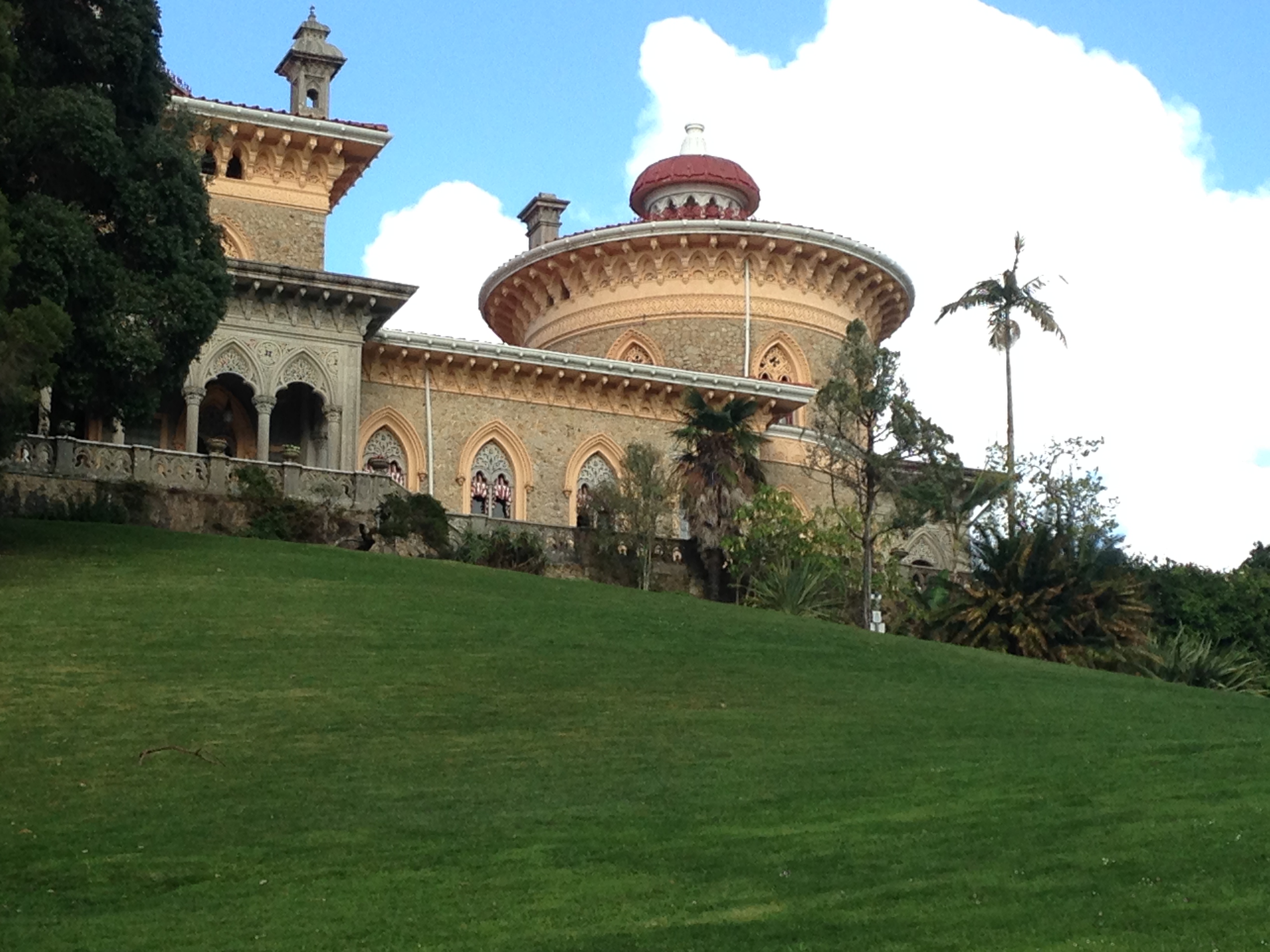
I would also recommend checking out some of the beautiful estates. Quinta da Regaleira and the palace of Monteserrate are both exquisite.

Just a short train ride from Lisbon, Sintra feels like it belongs to another world entirely.
It is a place where fairytale castles crown misty hills, secret tunnels wind through enchanted gardens, and Moorish walls snake across forested peaks. With its rich history, romantic architecture, and dreamlike setting, Sintra is a must-visit for anyone traveling to Portugal.
Here’s everything you need to know to plan your visit, including how to get there and what to see.
Getting to Sintra
Sintra is located about 30 kilometers (18 miles) west of Lisbon and is easily reachable by train. We arrived in our rental car and the drive was super easy. If you choose to drive, know that once you arrive in Sintra, the roads are quite narrow. They were made centuries ago for horse and carriages, not cars. We found it easiest to park the car on the road and walk almost everywhere. We did grab the bus up the hill to Pena Palace to save time.
If you take the train, start from Lisbon’s Rossio Station. Direct trains depart roughly every 30 minutes and take about 40 minutes to reach Sintra. Tickets are inexpensive—around €2.50 each way—and there’s no need to book in advance. Once you arrive in Sintra, the town center is walkable. But reaching the palaces and castles scattered across the hills requires just a bit more effort. You’ll want to prepare for either a lot of uphill walking or hopping on the local buses.
Getting Around Sintra
Sintra is really compact. But because it is packed with attractions, it’s wise to arrive early. Prioritize which places you want to see most. If possible, avoid weekends and summer afternoons, when crowds are heaviest.
The bus signs and drop offs are easy to understand and well marked. Bus 434 is the most convenient for first-time visitors. It loops from the train station up to several major sites, including the Moorish Castle and Pena Palace. Bus 435 serves Quinta da Regaleira and Monserrate Palace.
Palácio Nacional de Sintra (Sintra National Palace)
The Sintra National Palace is located right in the heart of the old town. It is the most accessible of the town’s historic sites. Culturally, it is also one of the most important. Known for its twin white conical chimneys, the palace has been continuously inhabited since the Middle Ages. It was a favorite summer retreat of Portuguese royalty.

What makes this palace particularly compelling is its architectural evolution. There’s a blend of Moorish, Gothic, Manueline, and Renaissance styles layered over centuries. Inside, you’ll find beautifully preserved rooms decorated with painted ceilings, intricate tilework (azulejos), and collections of furniture and art. Don’t miss the Swan Room, the Magpie Room (with its curious tiled birds), and the spectacular Arab Room.
The Sintra National Palace is a good place to start your day. It is especially remarkable if you’re interested in Portugal’s royal and cultural history.

Palácio Nacional da Pena (Pena Palace)
Arguably the most iconic site in Sintra, the colorful Pena Palace looks like something from a storybook. Perched high above the town on a forested hill, it’s a wild confection of turrets, domes, and candy-colored facades. The palace was commissioned in the 19th century by King Ferdinand II, a patron of the arts and architecture who infused the structure with Romantic sensibilities and whimsical flourishes.

Inside, the palace is preserved as it was in royal days, with lavish rooms and period furnishings. But even if you skip the interior, the views from the exterior terraces are worth the journey alone. On a clear day, you can see all the way to Lisbon and the Atlantic Ocean.
To get there, most visitors take Bus 434 from the train station. From the drop-off point, there’s still a short but steep walk up to the entrance. You can take a small shuttle (for a small fee) that runs from the ticket gate to the palace.
It’s best to buy timed-entry tickets in advance, as Pena Palace can get extremely crowded, particularly in the summer months.
Castelo dos Mouros (Moorish Castle)
Just a short hike from Pena Palace is the Castelo dos Mouros. This is a ruined fortress that predates most of Sintra’s other monuments. Built by the Moors in the 8th or 9th century, the castle was strategically located to protect the region. It offers sweeping views in every direction.
Though it’s mostly in ruins today, the surviving walls and towers are still walkable. Climbing along the ramparts gives visitors a real sense of the castle’s former power. It also provides a dramatic perspective over the surrounding valleys and coastline.
The Moorish Castle pairs well with a visit to Pena Palace. It’s possible to see both in a few hours if you start early. The forest trail connecting the two is scenic and atmospheric, and walking it feels like stepping back in time.

Quinta da Regaleira
If Pena Palace is Sintra’s most photographed landmark, Quinta da Regaleira might be its most mysterious and intriguing. Built in the early 20th century by wealthy eccentric António Augusto Carvalho Monteiro, this Gothic mansion and its extensive gardens are packed with symbols of alchemy, Freemasonry, and the Knights Templar.

The highlight for many is the Initiation Well. This is a deep spiral staircase that descends underground and connects to a labyrinth of tunnels. Exploring the gardens feels like wandering through a magical realm. One moment you’re crossing a stone bridge, the next you’re ducking into a hidden grotto or climbing a tower straight out of a fairy tale.

The main house is also open for visits. The elegant estate includes richly decorated rooms and sweeping verandas, but the gardens are the real star. Give yourself plenty of time to explore—an hour or two here passes quickly.
Palácio de Monserrate (Monserrate Palace)
Often overlooked by day-trippers in a hurry, Monserrate Palace is a true gem and well worth the extra effort. This 19th-century palace was the summer home of British writer and aristocrat Sir Francis Cook. It reflects a fascinating mix of Gothic, Moorish, and Indian architectural influences.
Though smaller than Pena or the National Palace, Monserrate is exquisitely designed. You’ll see scalloped arches, delicate stonework, and richly patterned ceilings. The real standout, though, is the surrounding botanical garden. The gardens sprawl over several hectares and features plants from all over the world, arranged into themed sections like the Mexican Garden, the Fern Valley, and the Rose Garden.
Because it’s farther from the town center, Monserrate tends to be much quieter. We found it to be a peaceful and restorative stop—especially after the busier tourist sites.


Final Thoughts
Sintra is more than just a day trip. It is a fascinating dive into Portugal’s layered past. From medieval fortresses to Romantic palaces to esoteric gardens filled with secrets. It is possible to run through the highlights in a single day. But you’ll get far more out of the experience by spending at least one night in town, or prioritizing a few key sites. Then you’ll get to slow down a bit and really see more at each one.
Whether you’re standing on the ramparts of the Moorish Castle with the wind in your hair, descending the spiral into Quinta da Regaleira’s mysterious well, or gazing across the hills from the terrace of Pena Palace, Sintra has a way of making you feel like you’ve stepped into another world entirely. You may find it very hard to leave.